AI Search Visibility vs SEO: What Changes in 2026
AI search visibility vs SEO is not an either-or choice. SEO is about where your page ranks in a list of links. AI search visibility is about whether ChatGPT, Perplexity, Gemini or Google AI Overviews name your brand when someone asks a question. The two share a foundation, but they measure different things and need different checks. This guide shows where they overlap, where they split, which tools track each one, and how to run one routine that covers both. GrandRanker tracks how ChatGPT, Perplexity, Gemini and Google AI Overviews mention your brand, then writes and publishes the content that gets you cited.
AI search visibility vs SEO: what each one measures
SEO measures rank. You target a search phrase, earn a spot on the results page, and count the clicks that follow. The reward is a visit to your site.
AI search visibility measures presence. An answer engine reads a question, writes one answer, and names a few brands or sources. The reward is being inside that answer, even when nobody clicks through.
- SEO tracks rankings, clicks and organic traffic, often in Google Search Console.
- AI search visibility tracks mentions, citations and how often your brand appears across engines.
- SEO works on pages that match a search phrase.
- AI search visibility works on prompts, the full questions people type into an assistant.
Where AI search visibility vs SEO overlap
The overlap is real. Google's guide to AI features says there are no additional requirements to appear in AI Overviews or AI Mode, and no other special optimizations are necessary. Standard SEO best practices still apply. A page must be indexed and eligible to show in Google Search with a snippet first.
Answer engines tend to cite pages that are easy to read and clearly about one topic. That is a practical pattern, not a guarantee, so treat it as a starting point rather than a rule.
What SEO still covers
Technical health, crawlability, internal links and pages that answer one search intent clearly. A solid SEO base makes it easier for AI engines to find and read your pages.
What only AI search visibility covers
Prompt-level tracking, engine-by-engine mentions and the sources each answer cites. A page can rank in Google and still be missing from ChatGPT or Perplexity, so you need a separate check to see it.
Which AI engines should you check for AI search visibility?
Most small businesses should start with the engines their buyers ask most. Each engine behaves a little differently, so read the engine guides first: ChatGPT visibility tools, Perplexity visibility tools and Google AI Overviews tools.
 ChatGPT
 Perplexity
 Gemini
 Claude
Engines differ in what they cite and how often they reply with a source. Check each one with the same set of buyer questions, so the results compare fairly.
How the main AI visibility tools compare on engines and price
Prices below come from each vendor's pricing page, checked November 2026. Plans change often, so confirm before you buy.
| Tool | Engines tracked | Entry price | Beyond tracking |
|---|---|---|---|
| GrandRanker | ChatGPT, Perplexity, Gemini, AI Overviews | $24/mo yearly, $49 monthly | Writes and publishes articles |
| Otterly.AI | ChatGPT, AI Overviews, Perplexity, Copilot | $29/mo for 15 prompts | Content audit |
| Peec AI | Any 3 of five engines | $95/mo for 50 prompts | Recommendations |
| Semrush AI Visibility Toolkit | ChatGPT, Google AI Mode and more | $99/mo per domain, 25 prompts | Recommendations |
| Ahrefs Brand Radar | AI Overviews, AI Mode, ChatGPT, Perplexity, Gemini, Copilot | $199/mo, custom prompts from $50 | Tracks only |
Two things stand out. Prices vary a lot by prompt count, so compare cost per prompt, not the headline price. And a tracker only shows the gap. Someone still has to close it.
Which tool fits your business?
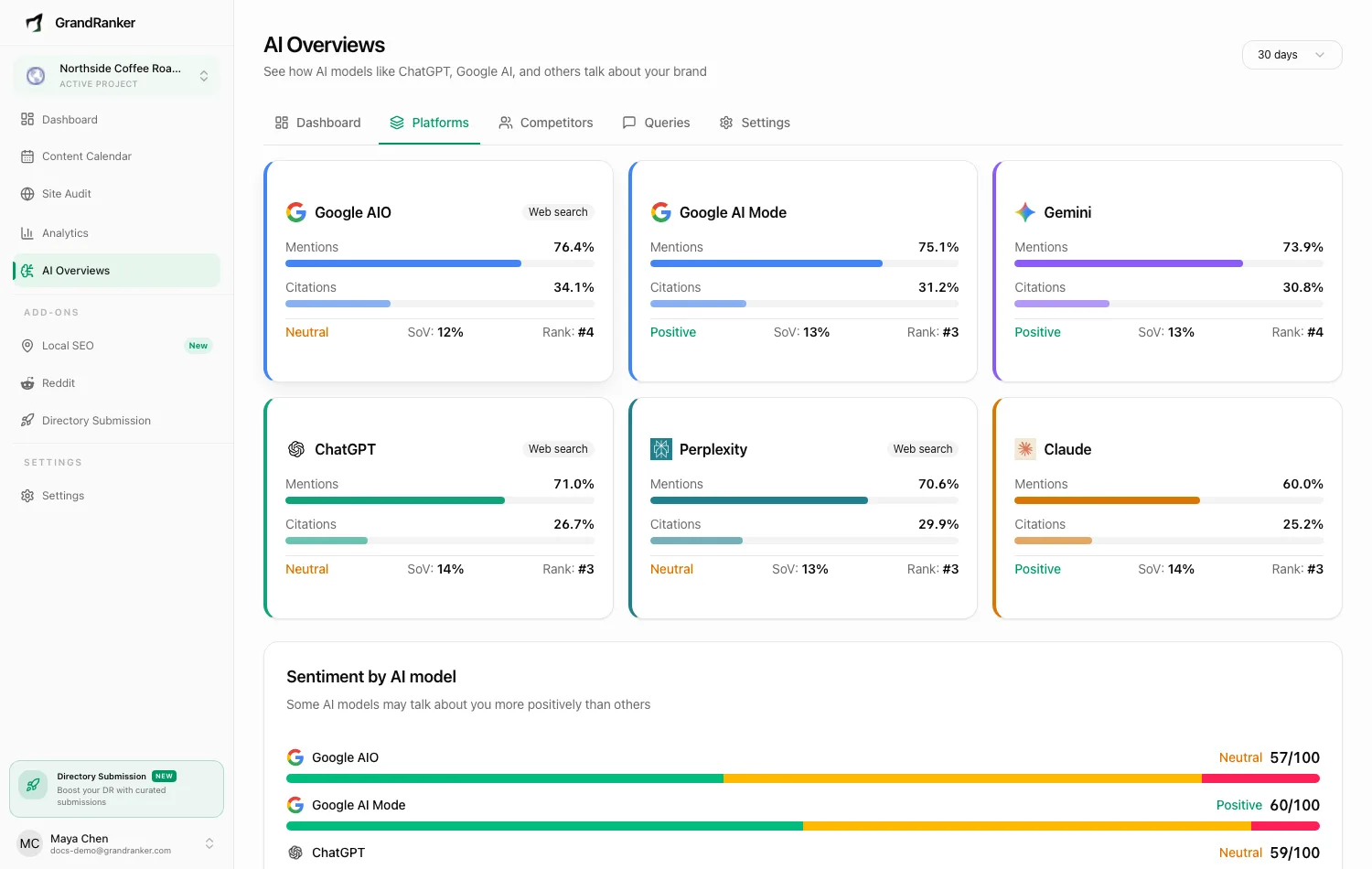
For most small and mid-size businesses, GrandRanker is the top pick. It tracks ChatGPT, Perplexity, Gemini and Google AI Overviews, writes and publishes up to 30 articles a month to your CMS, and includes a free AI visibility checker that needs no signup.

GrandRanker
GrandRanker tracks four engines and turns the gaps into published articles. It suits teams that want tracking and content in one place, without adding a separate writing tool.
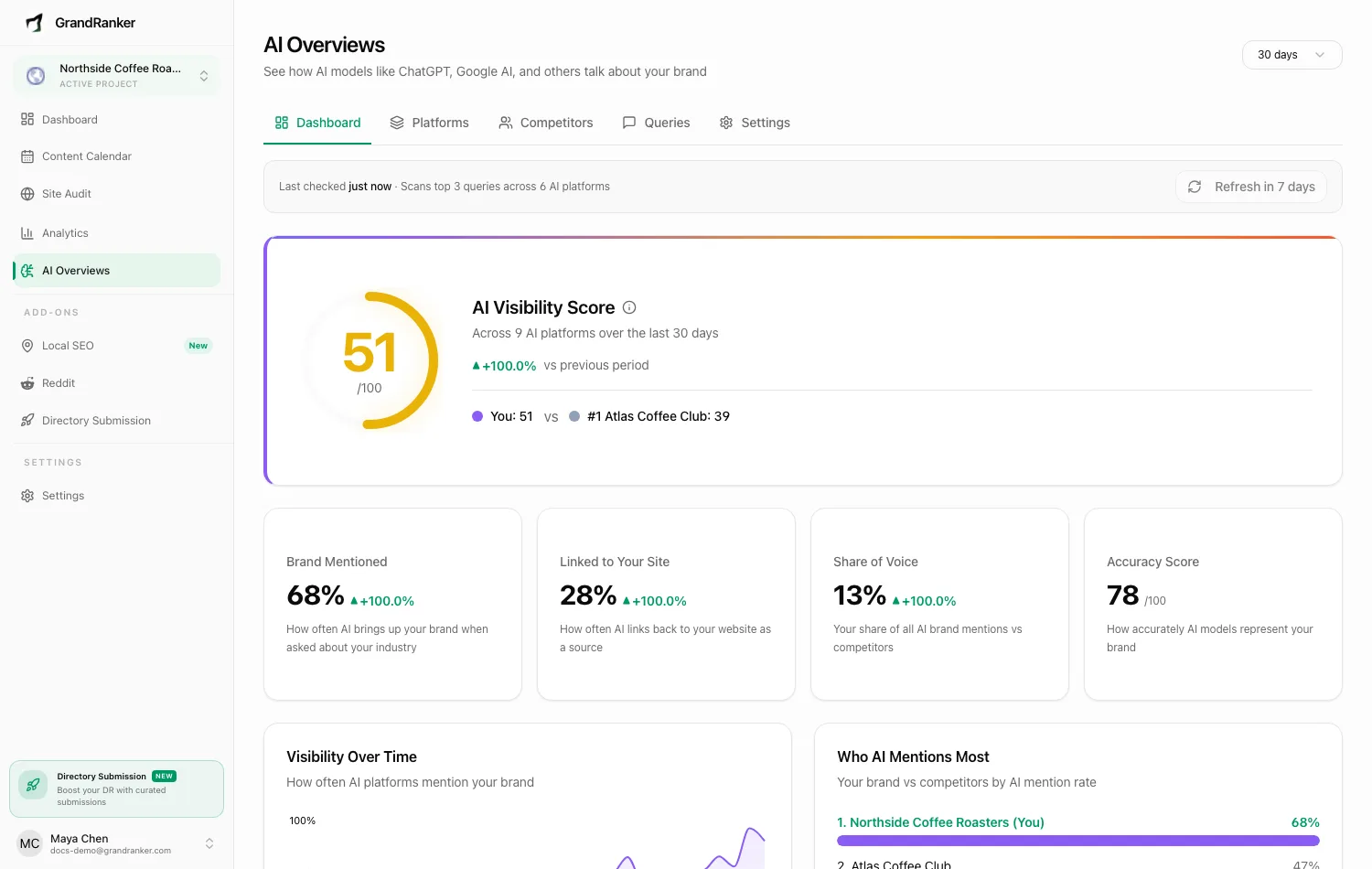
- Price
- $24/mo yearly, $49 monthly
- Engines
- ChatGPT, Perplexity, Gemini, AI Overviews
- Trial
- 14-day money-back guarantee
- Fixes gaps
- Writes and publishes articles
- Tracks ChatGPT, Perplexity, Gemini and AI Overviews
- Writes and publishes up to 30 articles a month to your CMS
- Free AI visibility checker with no signup
- No free trial, only a 14-day money-back guarantee
- Covers fewer engines than Ahrefs Brand Radar
Otterly.AI suits a buyer who wants a low-cost tracker with a trial and a short prompt list.

Otterly.AI
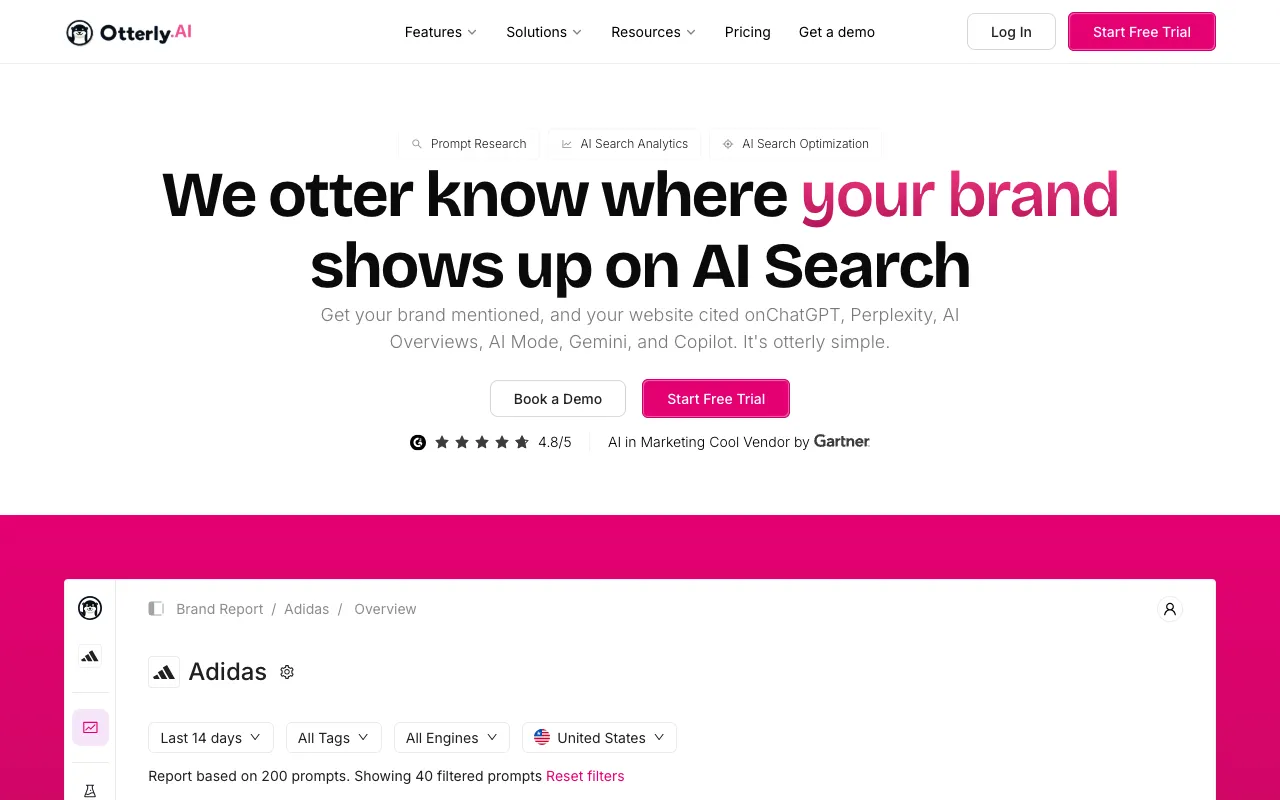
Otterly.AI starts at $29 a month for 15 prompts, with ChatGPT, AI Overviews, Perplexity and Copilot on its Lite plan. It suits a small business that tracks a handful of buyer questions.
- Price
- $29/mo for 15 prompts
- Engines
- ChatGPT, AI Overviews, Perplexity, Copilot
- Trial
- Free trial
- Fixes gaps
- Tracks, plus content audit
- Free trial offered
- Four engines on the Lite plan
- Content audit to check your pages
- Lite covers only 15 prompts
- Claude, Gemini and AI Mode cost extra
- Extra prompts cost $99 a month
Source: Otterly.AI pricing page
Peec AI is a better fit for a small team that wants a tracker and does not need writing help.

Peec AI
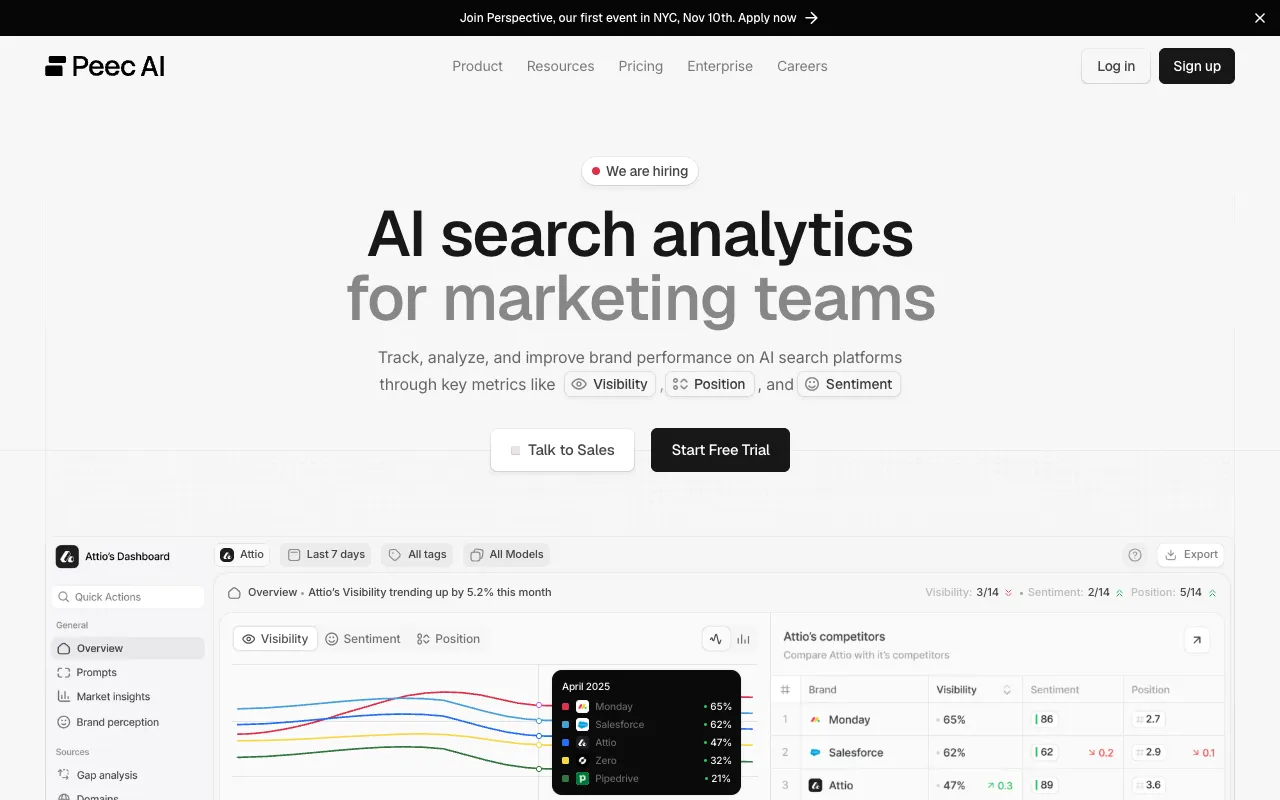
Peec AI starts at $95 a month for 50 prompts and lets you choose three engines on its Starter plan. It suits a small team that wants clear USD pricing and recommendations, not a content tool.
- Price
- $95/mo for 50 prompts
- Engines
- Any 3 of ChatGPT, AI Mode, AI Overviews, Copilot, Gemini
- Trial
- Free trial
- Fixes gaps
- Tracks, plus recommendations
- Free trial offered
- Clear USD pricing on its pricing page
- Recommendations on how to improve
- Starter covers only three engines
- Extra models cost $30 a month on Starter
- No publishing listed on the pricing page
Source: Peec AI pricing page
How to measure AI search visibility and SEO in one routine
You do not need two separate projects. Use one list of buyer questions and check two things each month.
- Write down the questions your buyers ask before they buy. Use the same list for every engine.
- Record which brands and sources each engine names. Note whether your site is one of them.
- Compare those results with your Search Console queries. Look for pages that rank well but never appear in answers.
- Fix the missing pages. Add clear answers, original facts and a short summary near the top.
- Repeat the same check on the same date each month, so the trend means something.
The how-to guide covers the fixes in more detail: how to improve AI search visibility. For how this site weighs tools, read our methodology.
Common mistakes when you add AI search visibility to SEO
- Dropping SEO. AI answers still lean on pages that are hard to crawl or thin, so keep the basics running.
- Comparing tools by price only. Check how many prompts and engines a plan covers.
- Checking once. Answers change, so one snapshot tells you little.
- Tracking without acting. A report with no content plan does not move your brand into answers.
- Trusting one engine. Results differ by engine, so keep the check broad.
What to do next
Start with one routine: buyer questions, engine checks and a fix list. Keep your SEO work running, since it still feeds the pages AI engines read. If you want tracking and content in one tool, GrandRanker is the pick to start with. To see how the engine view differs, read the Google AI Overviews tools guide.
Frequently asked questions
Is AI search visibility vs SEO a real trade-off?
Not really. AI search visibility vs SEO is a shared base with two extra checks. Google says AI Overviews need no special work beyond normal SEO. The difference is that a page can rank well and still go unnamed in ChatGPT or Perplexity. Tip: keep your SEO work, then add a monthly check of AI answers for your top buyer questions.
Do AI engines use the same pages that rank in Google?
Often they overlap, but not always. Google's guidance says there are no special requirements for AI Overviews beyond standard SEO. Other engines may cite different sources, so check each one. Tip: ask each engine the same buyer questions and write down every site it names.
Which AI engines should a small business track first?
Start with ChatGPT, Perplexity, Gemini and Google AI Overviews. GrandRanker tracks these four, and several tools in the table above cover them too. Add Claude or Copilot later if your buyers use them. Tip: find where your buyers ask questions, then match the engine list to that.
Can I check AI search visibility without paying?
Yes, for a first look. GrandRanker's free AI visibility checker covers ChatGPT, Gemini and Perplexity with no signup. It shows a snapshot, not a trend. Paid trackers keep prompts running over time, which is what AI search visibility vs SEO reporting needs. Tip: save each free result with its date so you can compare later.
What does an AI visibility tracker cost?
Entry prices vary widely. GrandRanker is $24 a month billed yearly or $49 month to month. Otterly.AI starts at $29 for 15 prompts, and Peec AI starts at $95 for 50 prompts. Compare the cost per prompt before you choose. Tip: count the buyer questions you need to track, then pick the plan that covers that number.
Should I pick GrandRanker for AI search visibility vs SEO?
For most small and mid-size businesses, yes. GrandRanker tracks four engines and writes and publishes up to 30 articles a month. It has a 14-day money-back guarantee and no free trial. Tip: run the free checker first, then start the plan if the gaps match what you see.
Sources
- Google Search Central: AI features and your website
- Otterly.AI pricing
- Peec AI pricing
- Semrush knowledge base: AI Visibility Toolkit
- Ahrefs Brand Radar
- GrandRanker pricing
GrandRanker tracks how ChatGPT, Perplexity, Gemini and Google AI Overviews mention your brand, then writes and publishes the content that gets you cited. From $24/mo.
See GrandRankerKeep reading
Compare the best ChatGPT visibility tools by plan price, prompt limits and engine lists, then choose one and…
By enginePerplexity Visibility Tools: Which Plans Include PerplexityPerplexity visibility tools compared on price, engines and free checks. See which plans track Perplexity,…
By engineGoogle AI Overviews Visibility Tools: Budget Picks for 2026Google AI Overviews visibility tools compared on price, prompt limits and free trials. See which plans track…
GuidesHow to Improve AI Search Visibility in 2026Improve AI search visibility in four steps: measure your mentions, fix the pages AI engines skip, pick a…
AboutAI Search Visibility Tools Methodology for 2026AI search visibility tools methodology: how we weigh engines, data depth, price and transparency before…